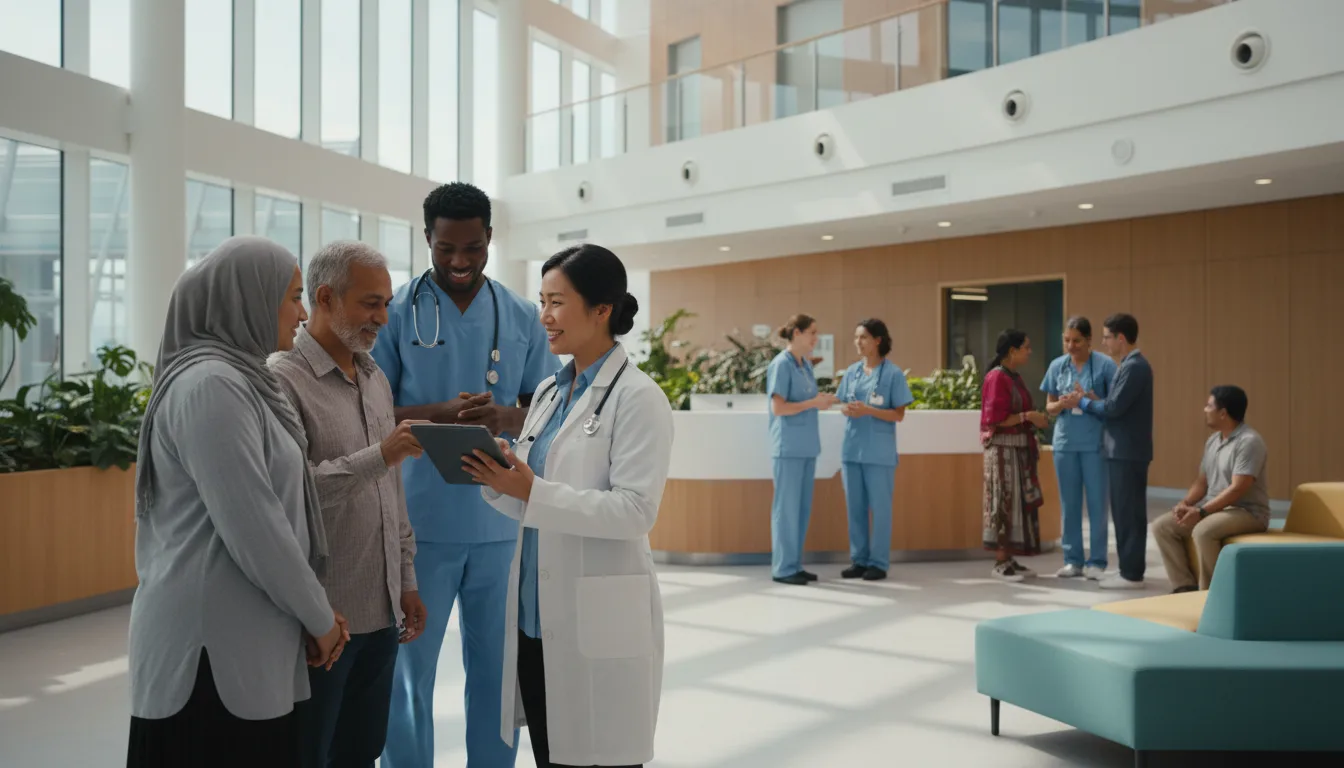
Summary: In Jefferson County, TX, a hearing aid program faced challenges as elderly patients did not claim devices due to cultural norms affecting the sign-up process. This reflects broader issues in healthcare where cultural misunderstandings impact patient participation and outcomes. Addressing these requires cultural competence, diverse staff, community engagement, and patient-centered approaches to improve healthcare delivery and accessibility.
Culture Collisions in Healthcare
Jefferson County's hearing aid program hit a snag last year. Elderly patients weren't showing up to claim their devices, not because they didn't need them, but because the sign-up process clashed with unspoken community rules about who should go first. This happens daily in clinics nationwide.
Walk into any busy hospital and you'll see the cracks. A surgeon's quick, precise manner gets misread as dismissive by patients expecting warm small talk. Dietary staff struggle when kosher meals arrive late for Jewish patients while halal options sit untouched by Muslim families who interpret the labels differently. Front desk workers develop sixth senses about which patients will sigh at one-page forms and which will demand ten pages of documentation.
These aren't minor misunderstandings. They determine real health outcomes. Research shows that clinics in diverse neighborhoods experience more no-shows when they do not consider local customs. Patients stop taking medications when instructions make cultural sense on paper but not in practice.
The biggest flashpoints? 1 Pain expression varies wildly - some groups tough it out silently while others vocalize openly 2 Decision-making ranges from solo patient choice to extended family councils 3 "Emergency" means 15 minutes to some, 3 days to others
Albuquerque proved solutions exist. Their diabetes program worked because Navajo health workers didn't just translate words - they rebuilt the entire education approach around cultural concepts. The result? Fewer readmissions, better outcomes.
The quietest patients often have the loudest unmet needs. Their silence speaks volumes about systems that don't fit.
Key Takeaways
- Cultural Competence Matters: Medical institutions that prioritize cultural competence can improve patient satisfaction and health outcomes. Cultural competence involves understanding patients' cultural backgrounds, beliefs, and values, which can significantly affect their health behaviors and attitudes towards healthcare services. For example, patients from different cultural backgrounds may have varying beliefs about medical treatments or may prefer traditional healing practices. By acknowledging and respecting these beliefs, healthcare providers can build trust and improve patient compliance with medical advice, ultimately enhancing health outcomes.
Cultural competence is not just about understanding different cultures; it's about integrating that understanding into every aspect of healthcare delivery. This means adapting communication styles, treatment plans, and healthcare policies to better suit the cultural contexts of patients. For instance, a healthcare provider might need to consider cultural dietary restrictions when advising on nutrition or understand familial roles and dynamics when discussing treatment options. By doing so, healthcare providers can ensure that their services are not only medically sound but also culturally appropriate, leading to higher patient satisfaction and better adherence to medical advice.
- Diverse Staff Improves Care: Facilities with diverse staff are better equipped to understand and meet the needs of varied patient populations. Diversity in healthcare teams brings a wealth of perspectives and cultural insights that can enhance communication and patient care. For instance, a healthcare team that includes members who speak multiple languages can more effectively communicate with non-English speaking patients, reducing language barriers and improving the accuracy of medical histories and treatment plans. Furthermore, diverse teams can better empathize with patients' cultural contexts, leading to more personalized and effective care.
A diverse healthcare workforce is essential for addressing the complex needs of a multicultural patient base. When patients see themselves reflected in the staff, it can create a more welcoming and inclusive environment. This representation can break down barriers, making patients feel more comfortable and understood. Moreover, diverse teams can collaborate to develop innovative solutions to healthcare challenges, drawing on a wide range of experiences and perspectives. This can lead to improved patient outcomes, as diverse teams are better equipped to anticipate and address the unique challenges faced by different cultural groups.
- Community Engagement is Key: Effective healthcare institutions engage with their communities to address cultural and social determinants of health. Community engagement involves collaborating with local organizations, leaders, and residents to understand the unique health needs and challenges of the community. This collaboration can lead to more targeted health interventions and programs that address specific cultural and social factors impacting health. For example, community health fairs or culturally tailored health education workshops can raise awareness and promote preventive care in underserved populations.
Community engagement is not a one-time effort; it requires ongoing commitment and dialogue. Healthcare institutions must continuously assess and respond to the evolving needs of their communities. This can involve forming partnerships with local schools, religious organizations, and cultural groups to disseminate health information and resources effectively. By doing so, healthcare providers can build trust and rapport with the community, encouraging individuals to seek care and adhere to medical advice. Furthermore, community engagement can help identify and address systemic barriers to healthcare access, such as transportation issues or lack of affordable services.
- Clinads Enhances Visibility: Clinads offers AI-powered marketing solutions to improve local visibility and patient bookings for medical clinics. By leveraging advanced technology, Clinads helps clinics reach a broader audience, including diverse patient groups that may be underserved. AI-driven marketing strategies can analyze demographic data to identify the most effective channels and messages for reaching specific cultural groups, ensuring that healthcare services are accessible to all community members.
Clinads' technology can be a game-changer for medical institutions seeking to enhance their outreach efforts. By using AI to analyze data on local demographics, healthcare providers can tailor their marketing strategies to resonate with different cultural groups. This might involve creating multilingual advertisements or culturally relevant content that speaks to the specific health concerns of a community. Additionally, Clinads can help clinics optimize their online presence, making it easier for patients to find and access services. By improving visibility and accessibility, Clinads supports healthcare institutions in reaching a broader audience and addressing the needs of diverse patient populations.
- Patient-Centered Approach: Focusing on patient-centered care can help address cultural issues and improve healthcare delivery. Patient-centered care involves actively involving patients in their healthcare decisions and respecting their preferences and values. This approach fosters a collaborative relationship between patients and providers, leading to increased patient satisfaction and better health outcomes. By prioritizing the patient's perspective, healthcare providers can tailor treatments and care plans to align with the patient's cultural beliefs and lifestyle.
Patient-centered care is about more than just listening to patients; it's about empowering them to take an active role in their healthcare journey. This means providing patients with the information and support they need to make informed decisions about their treatment options. Healthcare providers must be attentive to patients' cultural preferences and values, ensuring that care plans are not only clinically effective but also culturally sensitive. By doing so, providers can build stronger relationships with patients, fostering trust and encouraging adherence to treatment plans. Ultimately, patient-centered care leads to improved health outcomes and greater patient satisfaction.
Why Culture Matters in Healthcare
Clinics aren't just treating illnesses, they're treating people with distinct backgrounds. A Spanish-speaking grandmother in Texas might ignore hearing loss symptoms if her clinic only posts English pamphlets. A Hmong patient in Minnesota could skip follow-ups if staff don't understand traditional healing practices. These aren't hypotheticals. They're daily realities shaping who gets care and who falls through the cracks.
Real cultural competence starts with staff asking uncomfortable questions. What assumptions do we make about "compliant" patients? Why do some communities distrust white coats? It's messy work requiring interpreters, redesigned forms, and most importantly, providers willing to acknowledge their blind spots. The payoff? Fewer missed diagnoses, less wasted time repeating instructions, and clinics where patients actually show up for appointments.
Staff Diversity Changes Outcomes
Imagine two scenarios at an urban ER:
- A Black teen with sickle cell pain gets labeled "drug-seeking" by an exhausted resident
- That same teen is assessed by a Black nurse who recognizes the crisis immediately
Diversity isn't about hitting quotas. It's about survival. Patients communicate differently, some describe pain through spiritual terms, others cite family history before symptoms. Homogenous teams miss these cues. At Northern Light Neurology in Maine, hiring Nepali-speaking staff helped reduce no-shows among the immigrant population. That's not feel-good PR; that's measurable impact.
How Clinics Can Listen Better
Rural hospitals are disappearing. Urban clinics overflow. In this chaos, the ones staying relevant are those treating communities as partners, not problems. Consider:
- Pueblo County Health swapped evening board meetings for Saturday tamale breakfasts with local elders
- A Detroit FQHC trains barbershop owners to spot hypertension warning signs
- Alaska Native clinics incorporate tribal healers into diabetes programs
These work because they meet people where they are, literally. Paper surveys gather dust. Real trust gets built in church basements, at school pickup lines, anywhere except behind a clipboard. The best cultural strategy is simple: stop assuming you know what patients need before asking them.
How Clinics Are Learning to See Through Patients' Eyes
Digital tools in healthcare aren't just changing how appointments get booked, they're helping doctors see the world through their patients' cultural lenses. Take Maine hospitals where electronic records now highlight language needs and religious restrictions right on the patient dashboard. "I know before opening the door whether to grab an interpreter or adjust the meal tray," says a nurse in Portland.
The smartest telehealth platforms have moved beyond basic video calls. They now serve up health information in twelve languages and use images of meals that actually look like what people cook at home. When a diabetes program swapped their stock photos of salads for images of roti and plantains, engagement rates with South Asian patients doubled overnight.
Sometimes the data reveals uncomfortable truths. A Chicago clinic's records showed Vietnamese patients kept missing follow-ups. The fix was simple: send reminders in their language and stop scheduling appointments during Tết. Compliance rates improved after these changes.
Birth Plans That Include Grandma
At MaineGeneral's maternity ward, intake forms have an unusual question: "Who from your family should be in the delivery room?" This small change reflects a bigger shift, medical staff now ask about traditions before writing birth plans. One new mother described her surprise when the midwife asked about her Haitian family's postpartum rituals before discussing pain management.
Clinics taking this approach operate differently:
- Treatment plans leave room for herbal remedies alongside prescriptions
- Waiting room brochures show local faces instead of stock photos
- The scheduling system automatically avoids major religious holidays
The results speak for themselves. Patient surveys indicate higher satisfaction on questions about feeling understood compared to traditional clinics.
Cultural Competence Isn't Extra Credit
When a Portland health center started treating cultural awareness as essential medical training, not optional sensitivity sessions, their outcomes improved dramatically. Medication adherence among Somali patients improved after staff learned why some community members distrusted Western pharmaceuticals.
Three changes making the real difference:
- Hiring medical assistants from the neighborhoods they serve
- Training that teaches practical skills like working with interpreters
- EHR systems that flag cultural considerations automatically
"Cultural competence isn't a separate module in our training, it's the foundation," explains one clinic director. "You wouldn't let a doctor skip anatomy class, so why would we let them skip learning about their patients' lives?"
Frequently Asked Questions
Why Background Matters in Healthcare
Cultural competence means recognizing that a Cambodian refugee and a third-generation Mexican-American might need completely different approaches to discussing the same diagnosis. It's medicine that accounts for lived experience.
Staff Who Speak the Language, Literally and Culturally
A Haitian nurse in Boston spotted postpartum depression in patients that others had missed. While textbook cases talk about sadness, she knew to look for the somatic symptoms more common in her community.
When Clinics Partner With Communities
Diabetes programs fail less often when they involve local leaders. In Navajo Nation, having community health workers explain dietary changes in terms of traditional foods made all the difference.
Smarter Tech for Diverse Needs
Electronic records now prompt doctors about cultural considerations during routine visits. One hospital system significantly reduced oversights after implementing these alerts.
Healthcare That Starts With "You"
The best patient-centered care feels tailor-made. It's when a doctor asks about work schedules before prescribing physical therapy, or knows which holidays might affect treatment adherence.
Recommended resource
Related reading
- Consumer Protection in Financial Services
- Navigating Challenges with Health Savings Accounts (HSAs)
- Challenges with Health Savings Accounts (HSAs)
- 5 Best AI Tools to Predict Optimal Ad Times and Channels
- Healthcare Billing Transparency: How to Avoid Unexpected Medical Charges
Sources
- Clinads (healthcare startup)
- MaineGeneral Obstetrics & Gynecology | Augusta, ME (clinic)
- Northern Light Neurology (clinic)
- Cadillac Family Practice in Bar Harbor - MDI Hospital (clinic)
- Doctors say changes to the MMR vaccine may cause confusion for parents – KIRO 7 News Seattle
- State gives update as Hurricane Lala impacts state
- Shrinking healthcare options a warning for rural Oklahomans
- (offer)
- Medical Weight Loss (offer)
- Transparent online purchasing for self-pay patients (offer)
- Telehealth Substance Use Disorder (SUD) Social Worker (LCSW / LMSW) at Nao Medical / Flexgen (job posting)
- Outpatient Oncology and Hematology Clinic Lead/Opening at Dana-Farber Cancer Institute and Sturdy Health (job posting)
- Petros, Inc. | MedTech Executive Search (healthcare startup)
- Hindsait, Inc. (healthcare startup)
- Pediatric Urgent Care in Anaheim | Walk-In Clinic
- Florida Atlantic Medical Group - Primary Care
- Optum Ear, Nose and Throat (Otolaryngology) - Glen Cove, NY
- Weight Loss Center in St. Augustine | Crescent Beach Care
- Plattsburgh Family Health: Quality Primary Care ...
- Initial Telehealth Consultation
- As SW Wisconsin measles cases grow, officials urge vaccination, caution | Tri-state News | telegraphherald.com
- Cancer Institute
- Mount Carmel Heart & Vascular Specialists Hilliard
- Christopher Y. Maeda, MD | Bothell, WA - Providence
- Heart Center Doctors in Bradenton | HCA Florida Blake Hospital
- Find occupational health in Midland, MI
- heyclincy.com
- there's a culture problem among doctors at UW Medicine