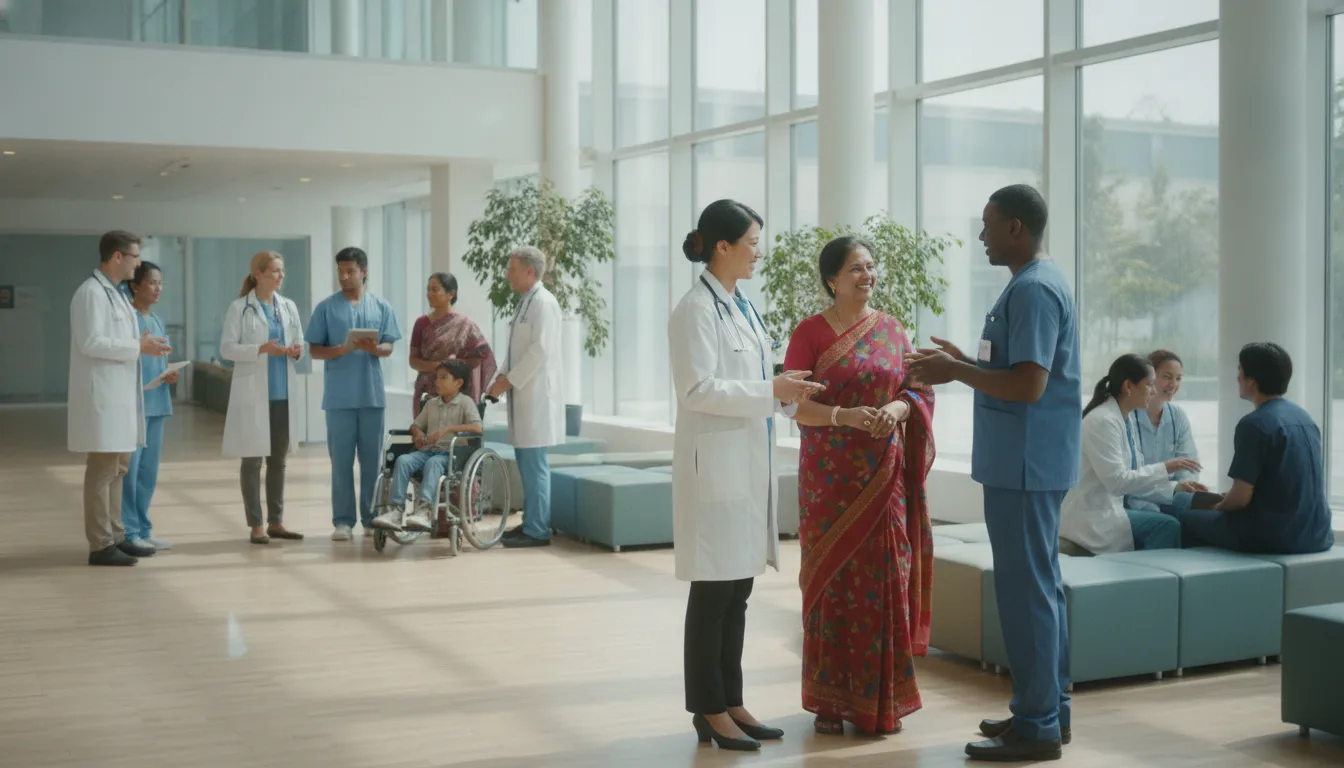
Summary: Pediatric Care Center No 2 Inc in West Palm Beach emphasizes the importance of cultural competency in healthcare, highlighting that understanding and respecting cultural differences can lead to better patient outcomes. By fostering a diverse staff and implementing ongoing cultural sensitivity training, medical institutions can improve communication, build trust, and provide care that aligns with patients' cultural values and expectations.
In clinics, culture shows up fast.
Patients don’t all walk in with the same assumptions, language, or expectations, and medical institutions feel that difference every day. The pediatric care center no 2 inc west palm beach points to a simple truth, staff need to notice cultural details if they want patients to feel understood and leave with better outcomes.
Key Takeaways
Cultural competency belongs in basic care.
It’s not ornament. Clinicians have to notice differences, yes, but they also need to catch the overlap between groups and the habits that shape how people talk about illness. Miss that, and trouble arrives fast. People hear you differently when they feel respected, and that changes the conversation, the treatment plan, and often the follow-up visit. It also lowers the chance of a bad guess, which matters when someone ignores the cultural setting and lands on the wrong diagnosis.
Language is only the start. Some patients trust traditional healing. Some want family in the room for every decision. Others bring a mix of both into the exam room, and if a care plan brushes past that, it starts to feel alien right away. If it fits, patients notice.
A mixed staff reads the room better. Patients from different backgrounds are more likely to feel understood when someone across the desk knows their idiom, their accent, or the small social cues that can turn a visit from tense to ordinary. Communication gets easier. So do instructions, which matters when a simple direction can turn into a mess.
There’s another gain here. Teams with different life histories do not think in the same grooves, so they spot different fixes. That matters in healthcare, where a fresh angle can mean a better answer. It also helps institutions look more like the communities they serve, and that builds trust in a way slogans never will.
Staff need repeated training, not a single afternoon lecture they forget by Tuesday. Good training helps people notice their own bias, handle cultural differences with less clumsiness, and speak to patients in a way that feels respectful instead of mechanical. It can cover beliefs, communication habits, and the ways health gaps show up in real clinics. The payoff is plain. Fewer misunderstandings. Better visits. A calmer workplace, too.
This work never really ends. Communities change. Patient needs shift. Clinics that treat training as a living process stay closer to the people they serve, and they can shape sessions around the actual population in front of them instead of some abstract average patient.
Care works better when it bends toward the patient’s culture. People are more willing to follow advice when they feel seen, and that can change outcomes in a very practical way. Ask questions. Let patients speak. Build the plan with them.
The basic idea is partnership. Patients bring beliefs, preferences, and lived experience into the room. Providers bring medical knowledge. When those two sides meet honestly, people understand their options better and feel more ownership of what happens next.
Clinics learn a lot when they stop guessing and start talking to the neighborhood. Local organizations, community leaders, and residents can point out the health concerns that matter most, along with the customs and language gaps that outsiders often miss. That contact builds trust. It also gives institutions feedback they can actually use.
And it works both ways. Community partners get information and outreach, while healthcare providers get a clearer picture of the people they serve. That makes prevention easier to promote, and it gives institutions a better shot at designing care that fits the crowd walking through the door.
Understanding Cultural Competency
Cultural competency in healthcare means a clinic can treat people whose values, beliefs, and habits differ from the staff's own. It sounds abstract until you watch a front desk handle forms, interpreters, family expectations, and food rules all at once. The Mattie Rhodes Center in Kansas City does this by offering services shaped around social determinants of health. That matters.
The job is messy. It starts with context.
A provider has to notice what shapes health behavior, from diet to traditional healing to a patient's attitude toward doctors and hospitals. Once those pieces are visible, treatment plans can be built around real lives instead of a generic chart. Health gaps matter too, because some groups carry a heavier burden than others, and a clinic that ignores that gap is pretending it isn't there.
The waiting room matters as well. Language help, educational material that fits the audience, and a physical space that doesn't feel hostile all send a signal before the first exam begins. Small things. Patients notice them.
The Role of Diverse Staffing
A mixed staff helps people talk to each other. That part is plain. When a medical team reflects the community around it, cultural gaps shrink and trust gets a better chance to grow. The Tuscaloosa Orthopedic & Joint Institute shows that idea in practice by employing board-certified orthopedists for a broad patient base.
Hiring from different backgrounds is only the first step. If the workplace feels cold or exclusionary, people leave, and the whole point evaporates. Training, mentoring, and employee resource groups can help, but they only work when the institution actually treats them as more than decoration.
People also learn from one another. A varied staff brings different stories, different habits, and different ways of solving a problem, which can lead to care that fits patients better. Patients tend to feel that difference quickly. Trust rises when the person in front of them understands where they're coming from.
Diversity in staffing also helps with health disparities. If the people delivering care look more like the people receiving it, patients are often more willing to show up, speak honestly, and stay engaged. That doesn't fix everything. It does make the room feel less distant.
Implementing Cultural Sensitivity Training
Training matters here.
Hospitals deal with people who do not share the same customs, expectations, or way of speaking. Regular cultural sensitivity training gives staff a better shot at handling those differences without making a mess of the encounter. Institutions like the U of A's MD-granting medical school on tribal land treat this as part of preparing future healthcare workers, and that makes sense.
These programs usually mix lectures, workshops, and hands-on learning. Staff hear about cultural beliefs, communication styles, and health gaps, then practice what that means in an actual clinic setting. The useful part is simple. People start noticing their own assumptions before those assumptions land badly on a patient.
The payoff reaches beyond one conversation at the bedside. Teams often work better when people are less likely to talk past each other, and that can help morale and retention. It also helps hospitals stay in step with accreditation and regulatory rules tied to cultural competency. Some administrators care about that for the paper trail, which is fair enough.
But this work never really ends. Communities change, and staff need to keep up. Feedback from patients and coworkers should stay in the room, not get filed away and forgotten. Training can also be shaped around the population a facility actually serves, which makes it more useful than a generic lecture ever could be.
Patient-Centered Care Approaches
Patients notice when they’re treated as people.
Patient-centered care starts from a plain idea, patients should have a say in their own care. That means listening carefully, asking what matters to them, and taking cultural preferences seriously instead of treating them like background noise. The Florida Atlantic Medical Group gives an example of this kind of care by adjusting treatment around a patient’s cultural background.
When people feel heard, they’re more likely to stick with advice and show up for preventive care. They also tend to trust the people treating them, which cuts down on confusion and mistakes. That part is hard to fake.
This approach is also about the setting around the patient. Culturally appropriate education materials help. Language assistance helps too. So does a waiting room that doesn’t feel hostile or cold. All of that adds up to care that respects the people walking through the door.
Engaging with Local Communities
Medical institutions learn a lot when they stop guessing and start listening. Local groups know the habits, worries, and cultural rules that shape care, and that knowledge matters.
The Copper Queen Community Hospital in Arizona shows the idea in practice. It runs rural health clinics built around the needs of the people who live there.
Community engagement means bringing community members into the planning and delivery of care. That can mean working with local organizations, doing community health assessments, or holding events and workshops. Small details show up fast this way. Providers see cultural patterns, health gaps, and barriers they might otherwise miss.
It also helps institutions beyond the clinic walls. Patients notice when a hospital takes local concerns seriously. Trust grows. So does loyalty, and referrals can follow. The feedback loop is useful too, because community input points to weak spots and bad assumptions.
This works only if both sides show up. Providers need local leaders and organizations. Communities need a real seat at the table. When that happens, education and outreach get easier, and preventive care gets more attention. People are more likely to seek care when the system feels familiar instead of alien.
Conclusion
Cultural issues in healthcare are not side issues. They shape whether patients feel understood, whether instructions make sense, and whether care fits the people receiving it.
Hospitals that treat cultural competency as part of daily work usually do better. A diverse workforce can close some gaps. Sensitivity training can help staff handle difference without clumsiness. Patient-centered care builds trust, and community engagement gives institutions a clearer view of local needs. The pediatric care center no 2 inc west palm beach is one example of what that can look like.
Put those pieces together, and the result is better communication, fewer misunderstandings, and care that fits more people.
Frequently Asked Questions
What is cultural competency in healthcare?
Cultural competency in healthcare is the ability to provide care that fits patients’ social, cultural, and linguistic needs. It asks providers to understand different backgrounds instead of pretending everyone arrives with the same expectations.
How can medical institutions improve cultural competency?
They can train staff regularly, hire a diverse workforce, and work with local communities to learn what patients actually need.
Why is diverse staffing important in healthcare?
Because staff and patients do not always speak the same cultural language. A broader workforce can make conversations clearer and the whole visit less awkward.
How does patient-centered care benefit patients?
It respects cultural preferences. That builds trust, makes medical advice easier to follow, and usually leaves patients more satisfied.
What role does community engagement play in healthcare?
It gives providers a direct view of the cultural health needs in the area. That leads to care that fits better.
Recommended resource
Related reading
- Consumer Protection for Pediatric Urgent Care in Anaheim: Fees, Insurance, Wait Times & Complaints
- Consumer Protection in Financial Services
- Navigating Challenges with Health Savings Accounts (HSAs)
- Self-Pay vs Insurance: 7 Best Patient Payment Options for Medical Care
- 7 Healthcare Marketing Software Platforms With the Tightest
Sources
- Clinads (healthcare startup)
- Tuscaloosa Orthopedic & Joint Institute | Orthopedists Near Me (clinic)
- CQCH Tombstone Primary Care Clinic (clinic)
- Mattie Rhodes Center Brings Behavioral Health Awareness to Northeast Families - Northeast News (news, northeastnews.net)
- U of A launches nation’s first MD-granting medical school branch on tribal land (news, azfamily.com)
- Florida Atlantic Medical Group - Primary Care
- Escaping Reality Massage Therapy - MassageBook (clinic)
- Eastern Oregon Health and Wellness to offer substance use treatment options | La Grande Observer (news, lagrandeobserver.com)
- (offer)
- Medical Weight Loss (offer)
- Transparent online purchasing for self-pay patients (offer)
- Telehealth Substance Use Disorder (SUD) Social Worker (LCSW / LMSW) at Nao Medical / Flexgen (job posting)
- Opens Outpatient Oncology and Hematology Clinic (Attleboro) - Dana-Farber Cancer Institute and Sturdy Health at Dana-Farber Cancer Institute; Sturdy Health (job posting)
- Petros, Inc. | MedTech Executive Search (healthcare startup)
- Hindsait, Inc. (healthcare startup)
- Pediatric Urgent Care in Anaheim | Walk-In Clinic
- Optum Ear, Nose and Throat (Otolaryngology) - Glen Cove, NY
- Weight Loss Center in St. Augustine | Crescent Beach Care
- Plattsburgh Family Health: Quality Primary Care ...
- Initial Telehealth Consultation
- Life-saving lung cancer technology at UCHealth Memorial Hospital Central | FOX21 News Colorado
- West Little Rock Emergency Hospital opens on Chenal Parkway | The Arkansas Democrat-Gazette - Arkansas' Best News Source
- Nearly 930 cyclosporiasis cases reported in N.C. since May
- Cancer Institute
- Mount Carmel Heart & Vascular Specialists Hilliard
- Christopher Y. Maeda, MD | Bothell, WA - Providence
- Heart Center Doctors in Bradenton | HCA Florida Blake Hospital
- Find occupational health in Midland, MI
- heyclincy.com
- there's a culture problem among doctors at UW Medicine