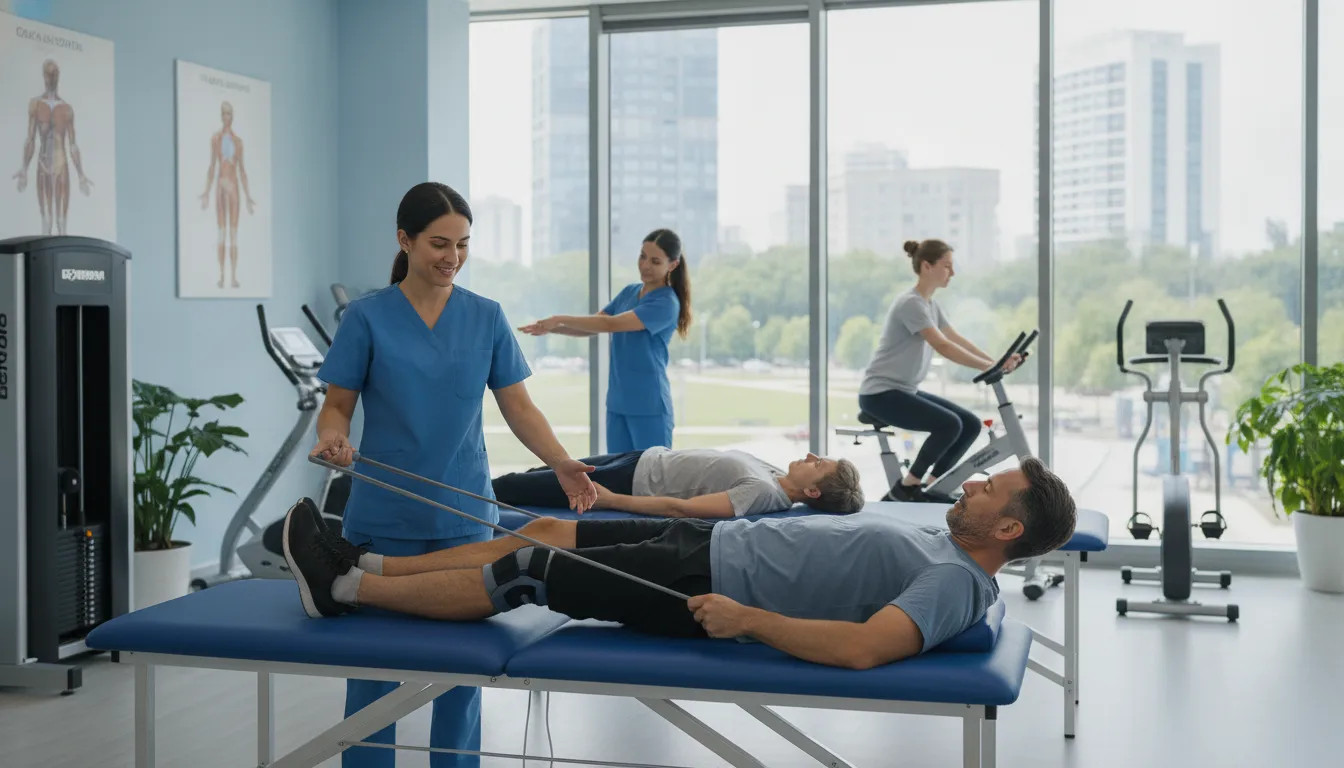
Summary: Heiser Physical Therapy stands out for its specialized services and patient-centered approach, offering personalized treatment plans tailored to individual needs. With a high rating of 4.8, the clinic integrates advanced technologies like ultrasound and electrical stimulation to enhance treatment precision and effectiveness. Multiple locations add convenience, making Heiser a top choice for patients seeking cutting-edge care and improved rehabilitation outcomes.
A patient recovering from knee surgery sits at a kitchen table with an ice pack nearby, scrolling through local practices and trying to separate real clinical skill from polished promotion. Of the 1,883 physical therapy clinics in our directory, nearly 70% have a rating of 4.5 or higher, and the median rating across those clinics is 4.8. When almost every place looks excellent on paper, patients still have to figure out who will actually pay attention and who will just hand over an exercise sheet.
Choosing a strong provider takes more than a quick look at review stars. You need to examine treatment philosophy, the gear inside the building, and the way a session actually unfolds. Facilities like Heiser Physical Therapy keep an average 4.8 rating by pairing tailored recovery plans with modern clinical modalities across several convenient regional offices. If you know how to judge equipment, therapist availability, and communication, you stand a better chance of finding a practice that fits your recovery goals. The right heiser physical therapy program should line up with the milestones you care about.
Key Takeaways
- High ratings crowd the directory: Of the 3,025 physical therapy clinics listed, 70% hold a rating of 4.5 or higher. Stars alone still leave plenty to sort through.
- Review volume gives some context: The median clinic listing has 60 reviews, which gives patients a rough feel for long-term consistency and staff behavior.
- Specialized services can matter: Practices like Heiser Physical Therapy offer targeted tools such as therapeutic ultrasound and electrical stimulation, while general wellness centers often do not.
- Location affects follow-through: Rehab two or three times a week gets hard if the office sits far from home or work, and missed visits pile up fast.
- Care has to change with the patient: The best rehabilitation centers skip one-size-fits-all routines. They keep checking movement patterns and adjust exercises as recovery moves along.
At a Glance
| Clinic Name | Rating | Services Offered | Location |
|---|---|---|---|
| Heiser Physical Therapy | 4.8 | Specialized PT services | Multiple locations |
| Florida Atlantic Medical Group | 5/5 | Primary care, geriatric medicine | Boca Raton, FL |
| Pediatric Urgent Care | 5/5 | Children's urgent care | Anaheim, CA |
What Makes Heiser Physical Therapy Stand Out?
Heiser Physical Therapy stands out because it combines tailored treatment plans with ultrasound and electrical stimulation across multiple easy-to-reach clinic locations. That setup pairs one-on-one evaluations with measurable functional milestones, and it earns a 4.8 rating by going after biomechanical root causes instead of stopping at surface symptoms.
Every rehabilitation program starts with a full physical assessment. Licensed physical therapists check joint mobility, muscle balance, neurological response, and movement compensation before they write the plan. They do not park patients in unsupervised gym corners. They work with people through progressive stages of recovery:
- First comes acute symptom management and lowering inflammation.
- Then manual therapy helps restore joint movement and tissue pliability.
- Therapeutic exercises build functional strength step by step.
- Neuromuscular re-education works on compensatory movement patterns.
- Long-term injury prevention and a custom home routine keep the work going.
Therapeutic ultrasound and neuromuscular electrical stimulation are folded into these routines. Ultrasound waves reach deep soft tissue, where they support microcirculation, ease chronic stiffness, and speed cellular repair in damaged tendons. Electrical stimulation helps wake up muscle fibers after joint surgery and can quiet muscle spasms that keep firing too hard.
Multiple regional offices make those services reachable without a punishing drive. A rehab plan that lasts weeks depends on scheduling people can actually keep. With technical equipment in accessible clinics, Heiser gives patients a place to finish their full care plans and reach their physical goals.
Comparing Heiser Physical Therapy to Other Top Clinics
Heiser Physical Therapy stands apart from broad medical groups because it stays focused on orthopedic and neurological rehabilitation. It does not try to be a family medicine shop on the side. Florida Atlantic Medical Group, by contrast, handles primary care and geriatric medicine. Heiser puts its time, staff, and equipment into movement repair, physical treatment methods, and musculoskeletal recovery.
Those structural differences matter when you’re picking where to go:
- Specialized Physical Therapy Centers: A place like Heiser puts its rooms, staff, and budget into rehabilitation work. Therapists spend their days on gait mechanics, post-surgical plans, athletic conditioning, and spinal stabilization. That kind of focus helps people coming back from joint replacements, sports injuries, or repetitive strain problems.
- Comprehensive Primary Care Groups: Clinics such as Florida Atlantic Medical Group deal with chronic disease tracking, prescriptions, routine checkups, and broader medical supervision. They matter for general health and older patients who need ongoing oversight. When a case needs weeks of intense rehabilitation, they send the patient elsewhere.
- Urgent Care and Walk-In Clinics: These clinics handle sudden problems, like small fractures, cuts, or an illness that shows up out of nowhere. They can stabilize an acute injury. They do not provide the long recovery work that physical therapy requires.
The way care is delivered also separates one facility from another. Large networks often move people through standard exercise sheets, with aides watching from a distance. At Heiser Physical Therapy, the therapist and patient work together more directly. Symptoms get reviewed at each visit. Movement quality gets watched closely. Resistance gets adjusted from what the patient can actually do that day. That kind of attention matters for unusual injuries and complicated medical histories.
How to Choose the Right Physical Therapy Clinic
Picking a physical therapy clinic takes more than glancing at a map and clicking the nearest name. Check therapist credentials. Read reviews with care. Look at the equipment in the building. Make sure the location fits your routine before you book the first visit. You also want one-on-one evaluations and progress checks, not a setup where people are left to repeat exercises alone.
Use this operational checklist when assessing prospective clinics:
- Verify Therapist Experience: Ask whether the therapists have training that fits your condition, such as orthopedic specialties, vestibular work, or sports rehabilitation. A clinic with people from several clinical backgrounds can manage harder cases, especially when more than one joint or system is involved.
- Examine Review Distribution: Don’t stop at the star rating. Read the written comments. Look for remarks about bedside manner, billing clarity, wait times, and whether people actually improved. Tools like our Free Patient Review Request Kit can help you gather what past patients have said, which makes the choice less of a guess.
- Assess Modality Availability: Check for equipment such as electrical stimulation units, therapeutic ultrasound devices, traction tables, and a space for gait assessment. A clinic without these tools may not offer the full set of physical interventions some patients need.
- Confirm Communication Standards: Ask the intake coordinator how progress is recorded, how often goals get checked again, and how the clinic sends reports to your orthopedic surgeon or physician.
- Inspect Location Logistics: Pick a clinic that fits your normal route. Physical therapy can mean two or three visits a week for months. Parking that actually works, plus appointment times you can keep, makes it more likely you’ll finish the plan.
A clinic that clears those basic bars is easier to stick with. That matters for your health, and it matters for getting mobility back in a way that lasts.
The Role of Technology in Physical Therapy
Physical therapy today makes room for therapeutic ultrasound, neuromuscular electrical stimulation, and digital motion tracking. These tools help therapists read the problem more clearly and, in some cases, speed tissue repair. At places like Heiser Physical Therapy, they sit beside active exercise programs. That gives clinicians something more precise to work with when manual mobilization alone won’t reach the injured structure.
These technologies support care through several different physiological routes:
- Therapeutic ultrasound: A soundhead sends high-frequency waves into muscle, ligament, and joint capsule tissue. The heat that follows can widen local blood vessels, improve nutrient delivery, soften tight collagen bands, and ease stubborn stiffness in cases such as tendinitis or a frozen shoulder.
- Electrical muscle stimulation (EMS): Electrical pulses reach motor nerves and trigger controlled contractions. After major procedures like anterior cruciate ligament reconstruction, the nervous system may quiet the quadriceps. EMS works around that block, helping preserve muscle tone and slowing disuse atrophy while the joint recovers.
- Transcutaneous electrical nerve stimulation (TENS): Low-voltage sensory input interferes with pain signals moving along peripheral nerves toward the brain. That kind of drug-free pain control can make active rehab easier, since patients guard less and move with less discomfort.
- Motion analysis and objective tracking: Digital sensors and video systems measure joint angles during running, squatting, or throwing. Tiny compensation patterns show up in the data, and therapists can correct them before they turn into secondary overuse problems.
Many clinics also use telehealth to keep care moving when a patient cannot get to the office. Through secure video visits, therapists can watch home exercise form, change band resistance, answer questions about movement, and steer recovery from afar. Remote check-ins, paired with in-clinic technology, help people stay involved and keep to the plan.
The Importance of Therapist-Patient Communication
Physical therapy works better when therapists and patients speak plainly and often. Pain levels change, fatigue changes, home exercise habits change, and the plan has to change with them. Clinics that build in two-way conversation give clinicians room to adjust manual work, reset exercise loads, and clear away barriers to recovery, which helps explain the strong satisfaction scores seen at Heiser Physical Therapy.
That communication does a few jobs during rehab:
- Setting honest starting points: Early visits should get specific. Patients need to say which motions trigger symptoms, and therapists need to explain anatomy and recovery time in words people can actually use. Skip the jargon, and the purpose of each exercise becomes easier to see.
- Making quick biofeedback changes: Tissue doesn’t respond the same way every day. If a loaded movement brings sharp joint pinching instead of ordinary muscle fatigue, the therapist can hear that right away and change the angle or cut the resistance before irritation builds.
- Keeping people with the program: When someone understands why a certain exercise targets stabilizing muscles, home practice becomes more likely. Therapists who explain the physiological reason behind daily stretching tend to get better follow-through at home.
- Lowering rehab anxiety: Pain that lingers and the limits that follow surgery can bring fear along with them. A therapist who listens closely and takes those concerns seriously can build trust, and that makes it easier for patients to push safely during strength work.
Plain conversation changes physical therapy into something more cooperative and less intimidating. Patients should look for clinics where questions are welcome, progress is measured in clear terms, and treatment changes reflect the realities of daily life.
Conclusion
Choosing a physical therapy provider means weighing clinical standards, newer treatment tools, patient feedback, and how close the clinic is to home. With resources like our Free Clinic Ad Compliance Checker, patients can make choices that fit their healthcare needs. Star ratings help a little, but they should not be the whole story. Better signs include a full functional assessment, direct one-on-one time, and recovery goals that are stated clearly.
If you’re coming back from joint surgery, dealing with repetitive strain, or trying to ease chronic spine stiffness, the right clinic gives you both equipment and guidance. Take time to look over the facility, ask detailed questions about the therapist’s background, and pick a practice that cares about long-term mobility.
Frequently Asked Questions
What services does Heiser Physical Therapy offer?
Heiser Physical Therapy offers physical therapy built around movement problems and musculoskeletal pain. The clinic’s work can include biomechanical assessments, exercise plans made for the person in front of them, joint mobilization by hand, therapeutic ultrasound, and neuromuscular electrical stimulation. Each plan is tied to the patient’s injury history and recovery goals, because the point is long-term rehab, not a quick pass through the room.
How do I choose between Heiser Physical Therapy and another clinic?
Start with the therapists. Look at their specialties, the equipment in the building, how sessions are structured, and how many reviews the clinic has collected. Tools like our Free Patient Review Request Kit can add another layer of context. It also helps to check whether the clinic gives direct care instead of sending several patients to one aide, and whether the hours and location fit your weekly routine.
Are there multiple locations for Heiser Physical Therapy?
Yes, Heiser Physical Therapy has several clinic locations for patients across the region. That matters in a practical way. People can get to weekly rehab visits without crossing town, and many can stop by on the way home from work. Less travel means fewer missed appointments, and that steadier attendance helps patients keep going through multi-week recovery programs.
How important are patient reviews in choosing a clinic?
Patient reviews give a direct look at daily clinic life, therapist communication, billing clarity, and how treatment actually feels to the person receiving it. High overall ratings can suggest a reliable clinic, but the written comments show more. They reveal how staff handle difficult injuries and patient concerns. When the same themes appear again and again across many entries, you get a better sense of which practices hold up over time.
What should I consider when evaluating clinic ratings?
Look at review volume, how steady the rating is, and the details people leave about outcomes. A rating of 4.8 backed by dozens of reviews tells you more than a perfect 5.0 score from just two entries. Pay attention to notes about therapist attentiveness, fast scheduling, cleanliness, and whether the physical gains last after treatment ends.
Recommended resource
Related reading
- Pro Optical: A Comprehensive 2026 Eye Clinic Comparison Guide
- Ferry Peak Women's Health: A 2026 Clinic Comparison
- How to Find Low Cost Clinics Without Insurance (2026 Guide)
- Can Doctors Delete Bad Reviews? 2026 Guide for Practices