Summary: The best weight loss center in San Diego is one that provides medical oversight, regular follow-up, and a program tailored to the individual's specific weight loss challenges. Long-term support is crucial, as many patients do not remain on GLP-1 drugs for extended periods. Clinics that emphasize monitoring, coaching, and maintenance are generally more effective than those focusing solely on initial results or medication offers.
A second automated notification buzzes on the counter to confirm that another box of prefilled pens cleared shipping, yet the scale still shows the same number it showed five weeks ago.
Social feeds keep pushing sponsored clips of easy body changes, wrapped in two-minute online intakes, even though those forms usually skip blood panels, kidney function, and resting cardiac history. Anyone trying to sort out the best weight loss center gets buried under thousands of sales pitches that dress mail-order drug retail up as medical care.
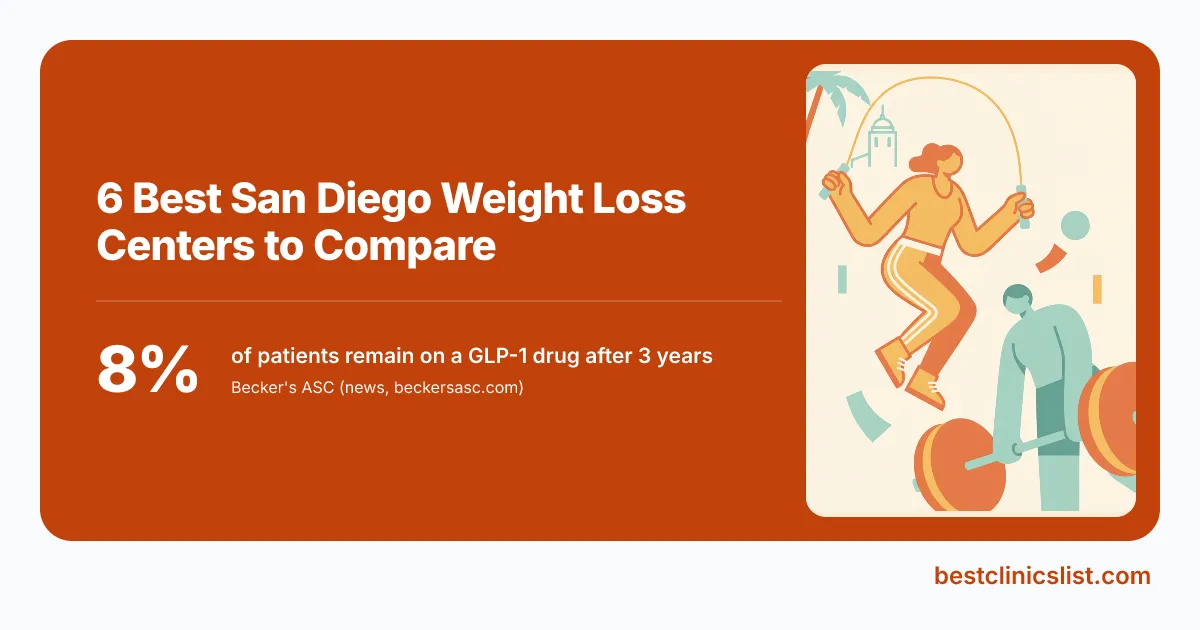
Choosing a clinic means looking at its day-to-day clinical rules, not its discounts or glossy welcome packets. You want to know who holds the medical license, how often you meet a clinician, and whether anyone on the team looks for the biological reasons behind weight you regained years ago. Six months of supervision matters far more than a cheap starting price. Becker's ASC reported in October 2026 showed that only 8% of patients stay on a GLP-1 drug after 3 years. Programs that pair long-term coaching, lab review, and planned titration exits give people in San Diego a lasting result that simple prescription fulfillment services cannot match.
1. SD Weight Loss Center: best for physician-led medication care
Dr. Michael Woo-Ming, MD, MPH, runs SD Weight Loss Center, and the office welcomes patients into locations across San Diego and Spring Valley with programs built around GLP-1 treatments. The fit is for people who want a physician reading their chart, not a gym trainer or a remote wellness rep handing out advice. Medical data drives the protocol from start to finish, and dosage changes tie back to actual diagnostic numbers.
Treatment plans center on Tirzepatide and Semaglutide. Patients can sit down with a medical doctor to talk through dose titration, nausea management, earlier metabolic testing, and the timing of blood draws. In-person oversight matters when someone is juggling several daily prescriptions, dealing with stubborn thyroid complications, or returning to injections after a past attempt stalled out. Direct time with a physician lets the dose shift with blood test results instead of staying locked to a fixed calendar.
Before anything is prescribed, the office takes blood samples, runs metabolic screening, and holds detailed consultations. Someone looking for casual dietary encouragement or basic habit coaching may find that level of testing too strict. If you want to judge the practice, ask the staff how they handle baseline panels, what follow-up visits include, and what happens when you stop the medication.
2. NEWLIFE Weight Loss & Wellness: best for wellness and aesthetic add-ons
People in San Diego who want cosmetic procedures along with metabolic help often turn to NEWLIFE Weight Loss & Wellness, an office that pairs lipotropic shots with cosmetic treatments like Botox. The setup suits clients who like to fold skin care and body-shape goals into one visit. The staff frames each appointment around broader personal care alongside weight routines. A long list of services draws patients who treat body weight as one piece of a grooming routine.
If you choose lipotropic shots, ask how the clinic explains the mechanism, what tools it uses to track body fat change, and how it decides to adjust treatment instead of repeating the same injection every week. Hard measurement goals help keep extra treatments from drifting into open-ended retail purchases. Long menus of unrelated services can pull attention away from root metabolic problems. One office handling five unrelated services saves a drive across town, but long-term fat loss still calls for structured medical and behavioral steps beyond an à la carte order.
Before you book here instead of a specialized medical practice, find out who writes your program, who reads your metabolic markers, and how the clinic handles maintenance when treatment ends.
3. SDSM Weight and Wellness: best for medically backed maintenance goals
San Diego Sports Medicine runs SDSM Weight and Wellness, and it offers physician-supported weight management programs built to help patients hit biological targets and keep them there over several years. The clinical setup suits people who care more about the stabilization phase after active loss than about fast, unsupervised drops on the scale. Long-term stabilization plans get the same attention as the first phase.
Serious medical programs separate themselves from short retail diets by spelling out maintenance steps. A clinic that claims sustainable outcomes should explain how visit timing changes once target metrics are reached, which medical resources stay available during maintenance, and how providers revise nutrition or drug plans when the body hits a natural plateau. Stable metabolic health depends on active management, not a sudden discharge.
With SDSM Weight and Wellness, the important question is how staff define success after the target biometrics are reached. Patients who have regained weight after leaving commercial programs before need to look closely at the maintenance track here. If those follow-up steps are clear before enrollment, patients are less likely to repeat the familiar pattern of brief loss followed by weight coming back.
4. SD Fat Loss: best for adults 35+ seeking a defined program
Operating under the name Weight Loss Center of San Diego, SD Fat Loss promotes a physician-designed protocol for men and women aged 35 and older, with claims that participants can lose 20-40+ pounds during an initial 60-day period while building habits that help preserve those losses. The system draws in older adults who want a fixed schedule and clear rules for midlife metabolic resistance. Time-bound plans give participants a plain daily structure.
Age-based marketing deserves pointed questions during intake about endocrine shifts, slower metabolism, lean muscle retention, and prescription interactions that show up in middle adulthood. A clinic that sets protocols for patients over 35 should show how its testing and nutrition targets differ from standard commercial programs. Careful screening keeps fast weight loss from coming at the cost of musculoskeletal health.
Big numerical targets call for close scrutiny before anyone signs a program agreement. Prospective clients should ask what daily steps the 60-day curriculum requires, how clinicians change the plan if weight loss falls short of the advertised numbers, and how the center guides clients through post-program stabilization. A defined program has real value only when the exit plan gets the same care as the opening phase.
5. MediFit Weight Loss: best for daily coaching and accountability
By pairing direct human mentorship with digital tracking, MediFit Weight Loss links local personal coaches with constant check-ins through its proprietary MediFit Connect mobile platform. This setup helps people who slip during the gaps between monthly clinical appointments and need outside reinforcement more often. Ongoing behavioral support closes the space between clinical theory and day-to-day follow-through.
Daily accountability deals with the small choices that keep derailing metabolic progress: business travel, social dinners, sudden cravings, and missed workouts. Patients who grasp the diet on paper but still struggle to carry it out often respond better to steady human feedback than to another standard meal sheet. Regular touchpoints keep attention on the task during hard behavior changes.
Digital accountability models depend on patient honesty and steady data entry. App-based coaching falls apart when a client skips meal logs, ignores alerts, or hides nutritional slip-ups after a rough week. Prospective MediFit clients should ask whether human specialists review app data each day, what educational modules come with the check-ins, and how coaches respond when participation drops.
6. MedArts Weight Loss Specialists: best for medical weight loss with aesthetics
Patients who go to MedArts Weight Loss Specialists in San Diego and Coronado can get physician-led weight programs, GLP-1 prescriptions, non-invasive contouring tools, and routine aesthetic treatments. MedArts suits people who want a clinical weight plan and cosmetic care under one roof. As body measurements change, clients can line up aesthetic visits with their prescriptions.
Keeping both services in one place cuts down travel for patients who plan skin tightening or targeted fat treatments while using weight medications. Even so, the basic health checks come first. Drug dosing, lab review, and heart monitoring carry risks that elective vanity work does not. People should check that cosmetic packages do not crowd out safety reviews.
Separate the clinical visit from cosmetic talk at once. Begin with blood work, medication choices based on your history, lab timing, and what happens when you stop. After the medical plan is set, talk about add-on body contouring with a clear view of the final cost and results.
How should you choose a weight loss center?
Start by matching the clinic's main method with whatever threw off your last attempt. If you want prescription help, you need diagnostic screening and a doctor who stays involved. If daily meal choices are where you fall apart, you need steady coaching and real accountability.
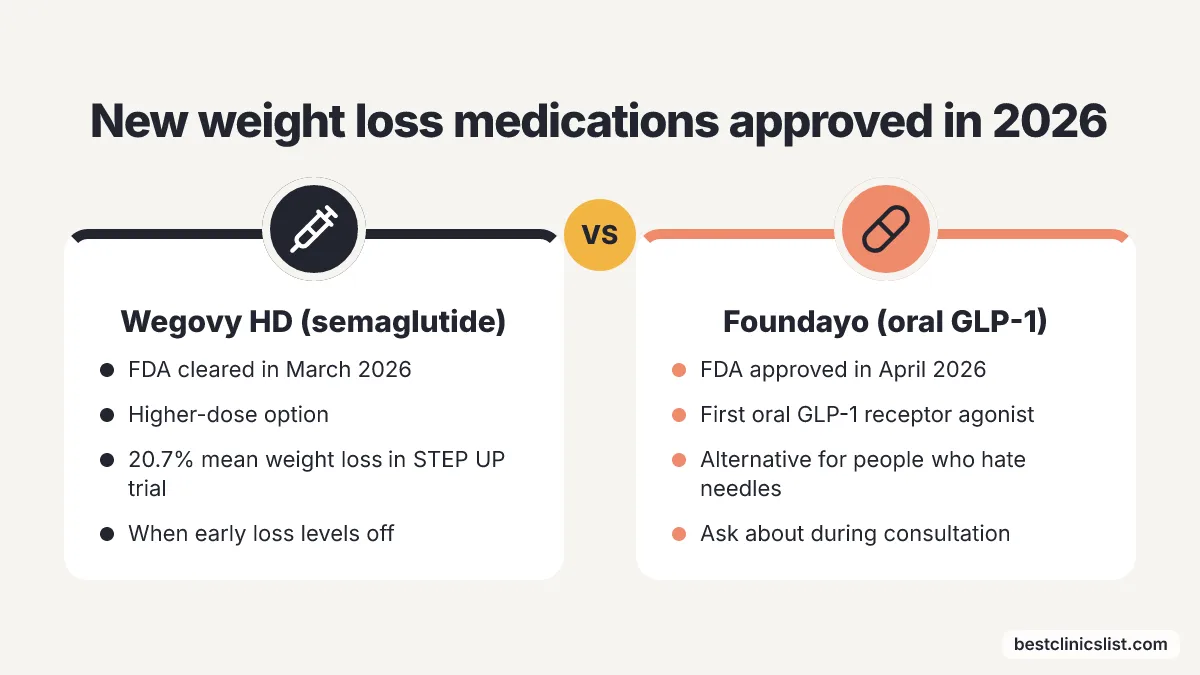
New approvals keep widening the field of medical weight management choices. In March 2026, the FDA cleared Wegovy HD, a higher-dose semaglutide option, after the STEP UP trial produced 20.7% mean weight loss. That gave prescribers another drug option when early weight loss starts to level off. Delivery formats go beyond the usual weekly shot now. CNN covered an FDA decision in April 2026 approving Eli Lilly's Foundayo as a new oral GLP-1 receptor agonist. For people who hate needles, that made an oral pill worth asking about during a consultation.
Prices and coverage deserve close scrutiny upfront, especially for older patients. CMS announced in July 2026 that eligible Medicare Part D recipients could get specific GLP-1 drugs for weight management at $50 per month under a federal bridge effort scheduled through December 31, 2027.
Compounded drugs call for hard questions at the intake desk. In March 2026, regulators sent warning letters to 30 telehealth companies over unsupported safety claims and shaky marketing for custom-mixed semaglutide and tirzepatide products. You need to find out whether a provider gives factory-made, FDA-approved drugs or custom blends from an outside compounder.
Bring four practical questions to your intake visit:
- Find out which licensed clinician decides if you qualify, and ask how they change doses during supply shortages, side effects, or long stalls.
- Ask about the exact follow-up rhythm, including how often blood is drawn and how coaches communicate with patients.
- Learn how the program handles maintenance once target numbers arrive, and separate deliberate stabilization care from an open-ended refill subscription.
- Request a printed breakdown that splits doctor fees, drug charges, coaching visits, injections, and optional supplements so hidden add-ons do not surprise you.
Our directory at Best Clinics List indexes vetted practices across U.S. markets. Readers who want broader results can use free US healthcare directory to filter providers by location, clinical specialty, accepted health plans, and perks like virtual check-ins. The Clinic Directory site is an informational guide only. It does not book visits, process clinic fees, write prescriptions, or offer medical advice.
Public stars help narrow your search, but internet ratings will not replace clinical checks. We track 559 Weight Management facilities across 183 cities as of November 2026. Many entries with reviews have high average ratings. A clean four-star rating alone says little about medical supervision or day-to-day bedside manner.
Surgical candidates need different directories than San Diego weight management. Bariatric operations call for accredited hospital suites, surgical teams, and dedicated post-operative care units. Those sit far apart from outpatient lifestyle offices or aesthetic storefronts.
Next steps: choosing a San Diego weight loss center
Book a visit with the facility built around your main barrier, whether you need intensive physician-run drug protocols, app-based check-ins, senior-focused nutrition, or medical oversight alongside aesthetic care. Bring your medication bottles, lab work history, insurance summaries, and a modest habit goal for your first 90 days.
Use your first appointment to interview the team. Pin down their patient criteria, monitoring tests, long-term exit steps, and full out-of-pocket pricing before you sign anything. Skip offices that dodge questions about physician availability or shrug off what happens after the prescription ends. Reputable centers lay out protocols, expected milestones, and all fees before they ask for payment.
When should you seek medical care during a weight loss program?
Contact the prescribing clinician promptly if you develop severe or persistent side effects while on a weight loss medication, such as severe stomach pain or vomiting that will not stop, and seek urgent care if symptoms feel serious. Do not change or stop a prescribed dose without talking to the clinician who manages it.
Frequently Asked Questions
What should I look for in the best San Diego weight loss center?
The best weight loss center in San Diego should provide medical oversight, regular follow-up, and a program tailored to individual weight loss challenges. Long-term support is crucial, focusing on monitoring, coaching, and maintenance rather than just initial results or medication offers.
Why is long-term support important in weight loss programs?
Long-term support is important because many patients do not continue using GLP-1 drugs over the long term. Programs that emphasize long-term coaching, lab review, and planned titration exits provide lasting results that simple prescription fulfillment services cannot match.
How does SD Weight Loss Center approach weight loss treatment?
SD Weight Loss Center, led by Dr. Michael Woo-Ming, focuses on physician-led medication care with programs built around GLP-1 treatments. The approach includes detailed consultations, metabolic screening, and in-person oversight to tailor dosage changes based on diagnostic numbers.
What makes MediFit Weight Loss unique in its approach?
MediFit Weight Loss pairs direct human mentorship with digital tracking through its MediFit Connect mobile platform. This setup provides daily coaching and accountability, helping individuals who need ongoing behavioral support to maintain progress between clinical appointments.
How does SDSM Weight and Wellness support long-term weight management?
SDSM Weight and Wellness offers physician-supported programs that emphasize long-term stabilization plans. They focus on maintaining target biometrics over several years, ensuring that maintenance steps are clearly defined to prevent weight regain after initial loss.
Related reading
Sources
- SD Weight Loss Center
- NEWLIFE Weight Loss & Wellness
- SDSM Weight and Wellness
- SD Fat Loss (Weight Loss Center of San Diego)
- MediFit Weight Loss
- MedArts Weight Loss Specialists