Summary: Among the Manhattan clinics to compare are First Class Physical Therapy downtown, Marko Physical Therapy on the Upper West Side, Go Physical Therapy near Columbus Circle, Manhattan Sports & Manual Physical Therapy for sports and manual therapy, Spear Physical Therapy in Times Square, and IPA Manhattan Physical Therapy in East Midtown. The best fit depends on whether its treatment focus, location, and appointment times suit your needs.
A 4pm appointment across town sounds manageable on paper, yet it quickly becomes the visit patients cancel when work runs late or subway lines stall. Searching for the top physical therapy clinics in New York often turns up dozens of highly rated places, but map distance alone does not tell you whether a clinic fits your condition, your daily route, or your calendar.
Rehabilitation asks for repeated sessions over several weeks. A spot that needs an awkward transfer or a cross-borough trip soon turns into missed care. In Manhattan, that means looking at First Class Physical Therapy downtown, Marko Physical Therapy uptown, Go Physical Therapy near Columbus Circle, Manhattan Sports & Manual Physical Therapy in Midtown, Spear Physical Therapy in Times Square, and IPA Manhattan Physical Therapy on the East Side. The better question is whether the clinic's treatment range, hours, and neighborhood fit match an appointment pattern you can actually keep.
A schedule that looks fine at the first visit can fall apart after orthopedic surgery, during sharp back pain, or in the middle of a brutal workweek. Patients do better when they pick a facility for the visits they can repeat, then confirm that the staff treats their exact diagnosis before they book the first intake.
1. First Class Physical Therapy: downtown Manhattan access
First Class Physical Therapy has a downtown Manhattan office at 225 Broadway, which works well for people commuting through lower Manhattan or working near City Hall and Wall Street. Choosing a practice in the Financial District helps commuters keep treatment on track, since long detours during a busy workday often lead to skipped visits. People searching for outpatient physical therapy near me often find that booking near an office hub or a major subway stop works much better than racing home for an evening slot. Prospective patients should call 225 Broadway to ask which early morning or late afternoon intake times are open, and whether the follow-up schedule stays steady from week to week.
For lower Manhattan, it helps to confirm that the first evaluation and the later rehab sessions stay at the same Broadway address. One location keeps transit predictable. Still, the appointment times have to fit your work calendar too.
Patients can prepare an intake call by saying: I have a physician referral for physical therapy and work near 225 Broadway, so what is your earliest evaluation slot, and what recurring times do you have open at this office? A direct answer to those scheduling questions gives clearer guidance than a map ever will.
2. Marko Physical Therapy: Upper West Side convenience
Marko Physical Therapy serves patients on Manhattan's Upper West Side, giving local residents an accessible choice if they want to avoid crosstown or downtown transit. The Upper West Side setting gives nearby residents a way to stick with a steady, walkable routine instead of relying on clinic marketing claims. Patients who plan recurring care around school drop-offs, residential life, or uptown routines gain dependable access by choosing an Upper West Side facility. A nearby street address does not prove clinical fit, so people with a medical referral should always check that the team treats their joint, tendon, or spinal condition.
Neighborhood residents also have other regional options to consider. In October 2026, JAG announced an Upper West Side clinic at 101 West 79th Street, giving area residents another place to ask about therapy availability.
Comparing uptown providers works best when you ask the same questions at each clinic. Ask when the intake evaluation can happen, confirm experience with your diagnosis, and check which recurring follow-up times are open. That kind of comparison shows real service availability instead of assuming the closest office is the right pick.
3. Go Physical Therapy: Columbus Circle area access
Go Physical Therapy greets patients at its Manhattan site on 30 West 60th Street, just a few steps from the southwest corner of Central Park and the Columbus Circle transit hub. That address puts Go Physical Therapy within easy reach for people looking for physical rehabilitation centers near me, especially if they want to book visits before or after a Midtown workday.
People who want a transit-friendly office often think of Columbus Circle as a practical place to begin a physical therapy assessment. The clinic facts do not name separate sub-specialty tracks, so patients should ask about the exact referral, the paperwork they need, and how many visits the plan calls for before they register.
Central addresses bring their own trade-offs. Rush-hour transit can throw off an arrival time, and morning appointments before work follow a different subway pattern than evening visits. Direct questions about open hours tell you more than a rough travel estimate. Callers ought to have the medical referral and preferred days of the week ready when they speak with intake staff. It also helps to ask whether the 30 West 60th Street office can hold recurring slots, because a convenient transit stop means little if the schedule keeps shifting.
4. Manhattan Sports & Manual Physical Therapy: sports and manual therapy focus
Manhattan Sports & Manual Physical Therapy offers sports and manual physical therapy in Manhattan, with a clinical focus that sits apart from general orthopedic rehab. People searching for sports physical therapy near me can decide whether the clinic's hands-on manual methods and athletic rehab fit the movement goals they already have in mind.
Runners, athletes, and active professionals often find that general clinic settings do not speak directly to return-to-sport needs. Manhattan Sports & Manual Physical Therapy gives those conversations a clear treatment focus, though patients still need to ask whether the staff has direct experience with their tissue injury or their post-surgical stage.
First-time callers can get better answers by describing the sport they want to return to and the main diagnosis listed on the doctor's prescription. Asking how therapists use joint mobilizations, soft-tissue work, and corrective exercises makes the treatment style easier to judge against recovery needs. Specialized care brings its own questions. A sports-focused clinic may fit a narrow biomechanical need, while a general orthopedic office can offer more room for routine referrals across the city. Patients have to weigh function against transit before they choose on proximity alone.
5. Spear Physical Therapy: Times Square location and system collaboration
Spear Physical Therapy runs a Times Square clinic at 729 Seventh Avenue, placing care along central Midtown subway lines for regional commuters. A Times Square address lets workers fit sessions into the middle of the day or the end of the day instead of heading out to residential neighborhoods. Plans for regional growth give patients useful context when they think about longer-term care. In September 2026, Spear and NewYork-Presbyterian announced a rehabilitation care collaboration with plans for nine outpatient rehabilitation locations across New York City and Westchester during 2026.
People seeking care in crowded transit corridors often like being tied to a larger health system network. The collaboration points to regional development across outpatient centers, but patients still need to confirm that the staff at 729 Seventh Avenue fits their rehab goals.
Intake calls should stay on ordinary administrative questions. Ask whether the clinic treats your diagnosis, how soon an initial evaluation can happen, and whether follow-up visits fit your weekly routine. Partnership news can tell you how far an organization reaches, but your rehab still depends on whether the schedule works for you.
6. IPA Manhattan Physical Therapy: East Midtown address
IPA Manhattan Physical Therapy runs an outpatient site at 18 East 48th Street. That location works for people moving through Grand Central Terminal by train, or for those tied to the office blocks near East Midtown, especially if they want an East Side spot they can reach without giving up a full workday.
If you work in East Midtown, a clinic within walking distance can keep weekly visits from eating half the afternoon with cross-town travel. Published clinic listings do not spell out the clinical subfields, so you need to call and ask which conditions they treat and how long the wait is for an initial intake slot. Being close to Grand Central helps on paper, but that only matters when the open appointment slots fit your work hours. Desk workers who cannot step out at lunch should ask about early morning times or late afternoon slots, because an East 48th Street address alone does not solve a crowded calendar.
When you compare IPA Manhattan Physical Therapy with other Midtown practices, write down the hard dates. Get the exact opening for the first evaluation, then check how far out they book repeat visits. Those concrete openings give you a schedule you can actually use, instead of a map pin that looks convenient and tells you very little.
How should you choose among New York physical therapy clinics?
The most reliable way to pick a clinic is to find one you can reach twice a week without missing visits. An office near your job works for someone with flexible morning or evening hours. A clinic close to your apartment serves people whose work sends them out of town or keeps their schedule shifting.
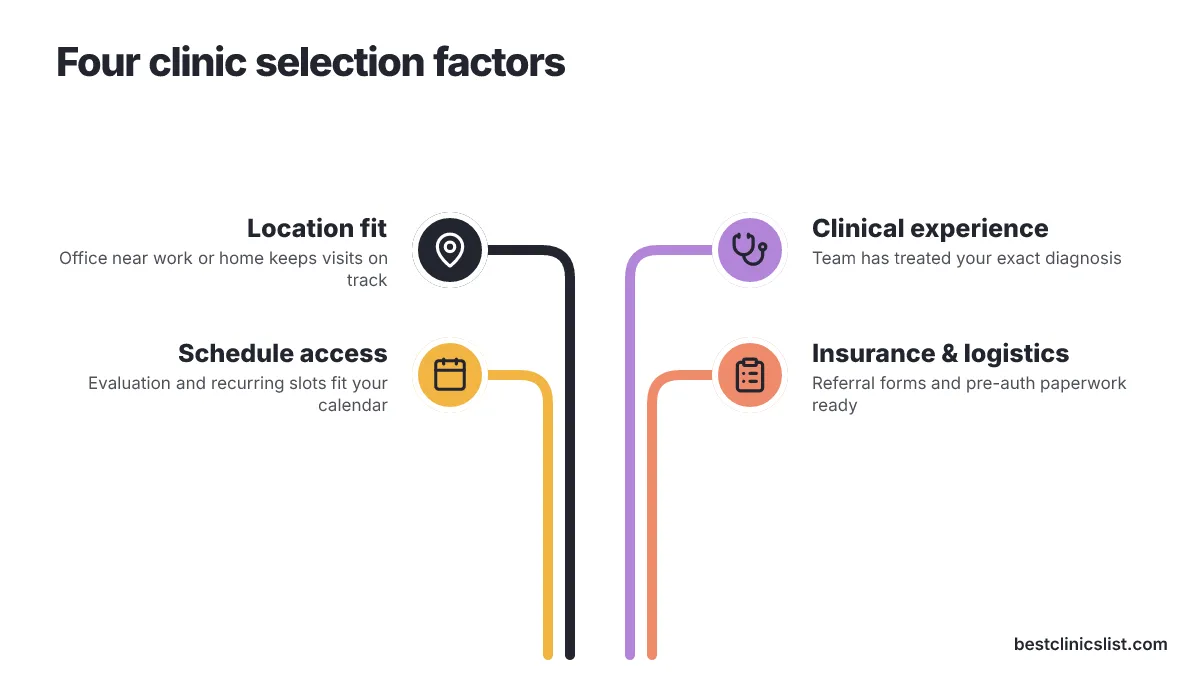
Turning a generic search for outpatient physical therapy near me into a usable plan takes a structured phone screen. Ask whether the clinical team has treated your exact diagnosis. Confirm that the evaluation happens one-on-one with a licensed physical therapist. Check your insurance rules, and ask whether the follow-up slots actually fit your calendar.
Patients can use this step-by-step process when screening clinics:
- Say your diagnosis or referral when you call, and confirm that the team treats that exact condition.
- Ask for the earliest opening for an initial evaluation, plus the weekly visit times that same location can offer.
- Find out which referral forms, imaging reports, or insurance pre-authorizations you need before the first session.
- Try the route during peak commuting hours, and check the travel time yourself instead of trusting off-peak map estimates.
This screening order keeps the decision tied to concrete facts. If an office can book a quick first visit but cannot give you regular follow-up times in the weeks after, look elsewhere before you commit to care.
Patients traveling into Manhattan from West New York need to treat cross-river travel as a real commute. Crossing the Hudson makes sense when a Manhattan practice offers a specialty you need or lines up with your workplace. For standard orthopedic care, a qualified clinic closer to home often leads to better attendance. Post-operative recovery plans are the clear exception to choosing from a public directory on your own. If an orthopedic surgeon issues a required rehabilitation plan naming an affiliated hospital rehab center or a set health network, follow that medical order instead of booking an outside private office.
New clinic openings keep adding options for patients who live outside central business districts. In August 2026, MOTION announced a Bay Ridge clinic at 8417 Fifth Avenue that treats orthopedic conditions, sports injuries, and post-operative recovery. JAG announced a second Greenpoint clinic at 29 Huron Street with specialized vestibular therapy and concussion management.
Brooklyn residents should look at neighborhood choices before signing up for a daily subway ride into Manhattan. Best Clinics List offers an independent guide to Brooklyn physical therapy clinics, which helps patients avoid cross-river travel that can disrupt attendance.
Best Clinics List is set up as a top-rated clinics near you directory built from a verified dataset of higher-rated providers across specialties and U.S. Cities, as described in how Best Clinics List works. The directory helps patients narrow regional choices, but people still need to call clinics directly to confirm accepted insurance plans, provider availability, and specialized therapy programs.
Checking clinical specialties the right way matters across medical fields. Vedha Family Dentistry runs as a dental practice under Dr. Devipriya Thirugnanasambandam, while the clinics in this guide provide rehabilitation care for orthopedic injuries, mobility limits, and physical recovery.
Screening New York physical therapy clinics comes down to a simple verification routine: choose a manageable transit corridor, call with your diagnosis details, get a firm date for your evaluation, and confirm that weekly follow-up visits fit your calendar. Location narrows the list. Verified scheduling access decides whether rehabilitation can actually happen.
Conclusion
Before you call, write down the two or three days and times you can actually get to therapy each week. Then ring the clinic that sits on the least annoying transit route. Keep your diagnosis, physician referral, and insurance card within reach, because the staff will need them when they check treatment limits and coverage on that first call.
Ask whether the branch you want has morning or evening follow-up slots that stay open there, not just somewhere else in the chain. A short ride does not help if the calendar never lines up with yours, so pass on places that cannot hold steady appointment blocks.
Start with your preferred clinic, ask the four intake screening questions, and book the first evaluation once their schedule matches yours.
Frequently Asked Questions
What are the top physical therapy clinics in New York to compare?
The article compares six Manhattan options: First Class Physical Therapy downtown at 225 Broadway, Marko Physical Therapy on the Upper West Side, Go Physical Therapy at 30 West 60th Street near Columbus Circle, Manhattan Sports & Manual Physical Therapy for sports and manual care, Spear Physical Therapy at 729 Seventh Avenue in Times Square, and IPA Manhattan Physical Therapy at 18 East 48th Street in East Midtown. The right choice depends on fit.
How do I choose between physical therapy clinics in Manhattan?
Compare each clinic's location with the route you can repeat, then check whether its staff treats the condition on your referral and whether the appointment pattern suits your calendar. The article emphasizes that proximity alone does not establish clinical fit. Ask when an evaluation is available and whether follow-up visits can stay at consistent times; a workable recurring schedule can help prevent missed care.
Which New York physical therapy clinic focuses on sports and manual therapy?
Manhattan Sports & Manual Physical Therapy is the article's option with a stated sports and manual therapy focus. It may suit readers considering athletic rehabilitation or hands-on care, but the article advises confirming experience with the specific tissue injury or post-surgical stage. Callers can describe their sport and diagnosis and ask how joint mobilizations, soft-tissue work, and corrective exercises are used.
Which physical therapy clinics in Manhattan are near major transit hubs?
The article identifies several transit-oriented locations: Go Physical Therapy is near Columbus Circle, Spear Physical Therapy is in Times Square along central Midtown subway lines, and IPA Manhattan Physical Therapy is near Grand Central Terminal. First Class is at 225 Broadway downtown, while Marko serves the Upper West Side. Your own commute and appointment hours matter, so check actual travel and availability.
What should I ask when calling a physical therapy clinic in New York?
Ask whether the clinic treats the condition on your referral, when an initial evaluation is available, and which recurring follow-up times are open. The article also recommends confirming that the evaluation and later sessions stay at the same location. For Go Physical Therapy, have the referral and preferred days ready; for First Class, ask about early morning or late afternoon openings.
Related reading
- Top 6 Brooklyn Physical Therapy Clinics to Consider
- 6 California Physical Therapy Clinics to Compare
- Top Towson Clinics for Quick Pre-Employment Physicals